
Cylinder seal
Unknown Artist
ca. 6th–5th century BCE
Medium
Calcite
Dimensions
0.91 in. (2.31 cm)
Classification
Stone-Cylinder Seals
Culture & Period
Achaemenid · Achaemenid
Department
Ancient Near Eastern Art
Museum
Metropolitan Museum of Art, New York, NY
Credit
Gift of Martin and Sarah Cherkasky, 1986
Accession Number
1986.311.54
Rights
Public Domain
Tags
Art Historical Context
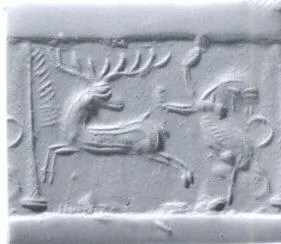
This exquisite cylinder seal, crafted around the 6th–5th century BCE during the Achaemenid period, hails from the vast Persian that stretched from the Indus Valley to the Mediterranean. Achaemenid cylinder seals this one were ingenious administrative tools: rolled across wet clay, they left a raised impression to authenticate documents, secure goods, or mark ownership, blending artistry with everyday bureaucracy in one of antiquity's greatest empires. Carved from translucent calcite—a durable, prized stone—this diminutive gem measures just 0.91 inches (2.31 cm) tall, showcasing the remarkable precision of ancient engravers. Its intaglio design likely features deer, a motif symbolizing grace, nobility, and the wild landscapes revered in Persian culture. Animals were common in Achaemenid seals, reflecting royal hunts and the empire's harmony with nature, as seen in grand palaces like Persepolis. Today, this seal resides in the Metropolitan Museum of Art's Ancient Near Eastern Art collection, a gift from Martin and Sarah Cherkasky in 1986. It offers a window into Achaemenid ingenuity, where miniature masterpieces served both practical and symbolic roles, bridging art, power, and daily life.