
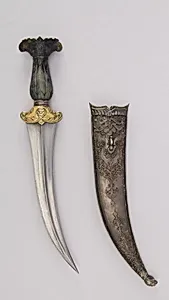
Dagger (Jambiya) with Sheath
Unknown Artist
18th–19th century
Medium
Steel, jade, gold, brass, gemstone
Dimensions
H. with sheath 15 1/16 in. (38.3 cm); H. without sheath 13 3/16 in. (33.5 cm); H. of blade 8 3/4 in. (22.2 cm); W. 2 7/16 in. (6.2 cm); D. 7/8 in. (2.2 cm); Wt. 11.8 oz. (334.5 g); Wt. 4.7 oz. (133.2 g)
Classification
Daggers
Culture
Turkish
Department
Arms and Armor
Museum
Metropolitan Museum of Art, New York, NY
Credit
Bequest of George C. Stone, 1935
Accession Number
36.25.661a, b
Rights
Public Domain
Art Historical Context
This exquisite Jambiya dagger with sheath, hailing from Turkish culture in the 18th–19th century, exemplifies the blend of functionality and opulence in Ottoman-era arms. Crafted from steel for the blade, with a hilt adorned in jade, gold, brass, and gemstones, it measures 15 1/16 inches (38.3 cm) with its sheath—elegant yet formidable. The lavish materials suggest it was more than a weapon; likely a ceremonial piece or symbol of status for elite warriors or officials, showcasing the era's masterful metalworking and gem-setting techniques. In the Metropolitan Museum of Art's Arms and Armor Department, this dagger highlights Turkey's rich tradition of decorated weaponry during the Ottoman Empire's later centuries. Jambiyas, with their curved blades (here 8 3/4 inches or 22.2 cm long), were prized for both combat utility and aesthetic appeal, often gifted or displayed to convey power and wealth. The unknown artisan's use of precious jade and gold reflects advanced decorative arts, where brass inlays and gemstones added symbolic value—jade for purity and protection, gold for enduring prestige. Bequeathed by George C. Stone in 1935, this 11.8-ounce (334.5 g) treasure invites us to ponder the cultural crossroads of the Islamic world, where arms doubled as portable art. A true gem for any visitor!