
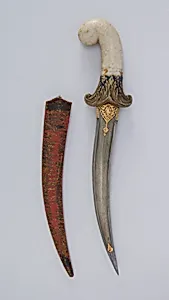
Dagger (Jambiya) with Sheath
Unknown Artist
19th century
Medium
Steel, marble, gold, silver, silk, wood
Dimensions
H. with sheath 16 5/8 in. (42.2 cm); H. without sheath 16 1/8 in. (41 cm); H. of blade 11 in. (27.9 cm); W. 3 in. (7.6 cm); Wt. 1 lb. 4.8 oz. (589.7 g); Wt. of sheath 0.9 oz. (25.5 g)
Classification
Daggers
Culture
Indian, Mughal
Department
Arms and Armor
Museum
Metropolitan Museum of Art, New York, NY
Credit
Bequest of George C. Stone, 1935
Accession Number
36.25.711a, b
Rights
Public Domain
Art Historical Context
This exquisite Jambiya dagger with its sheath exemplifies the lavish craftsmanship of 19th-century Mughal India, a period when the empire's artistic traditions blended Persian, Indian, and Islamic influences amid political power. Crafted from steel for the sharply curved blade—measuring 11 inches long—the hilt and fittings feature opulent materials like marble, gold, silver, silk, and wood, transforming a functional weapon into a status symbol for nobility. At 16⅝ inches tall with sheath, it weighs just over a pound, balancing lethality with elegance. In Mughal culture, jambiyas were more than arms; they signified wealth, masculinity, and authority, often worn at the waist in ceremonial dress. The intricate inlays of gold and silver on marble, paired with a silk-wrapped wooden sheath, highlight virtuoso metalworking and gem-setting techniques honed in imperial workshops. Such pieces, donated to the Metropolitan Museum of Art through the bequest of George C. Stone in 1935, now reside in the Arms and Armor department, offering a window into the splendor of India's royal courts.