
Dagger (Jambiya)
Unknown Artist
18th–19th century
Medium
Steel, ivory (elephant), gold
Dimensions
H. 12 3/8 in. (31.4 cm); H. of blade 8 1/2 in. (21.6 cm); W. 2 3/8 in. (6 cm); Wt. 11.6 oz. (328.9 g)
Classification
Daggers
Culture
Indian
Department
Arms and Armor
Museum
Metropolitan Museum of Art, New York, NY
Credit
Bequest of George C. Stone, 1935
Accession Number
36.25.1053
Rights
Public Domain
Art Historical Context
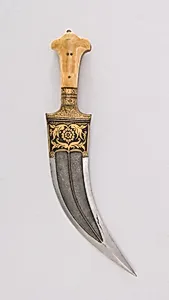
This exquisite Jambiya dagger, hailing from 18th–19th century India, exemplifies the fusion of functionality and opulence in South Asian arms craftsmanship. Measuring 12⅜ inches in height with an 8½-inch steel blade, its gently curved form is characteristic of the jambiya style, a dagger prized across regions for both combat and ceremonial display. Crafted for a warrior elite or nobility, such weapons symbolized status and prowess during the Mughal era and later princely states, when intricate arms became markers of power amid shifting empires. The dagger's hilt, fashioned from elephant ivory and adorned with gold, highlights masterful techniques in inlay and carving. Ivory provided a smooth, ergonomic grip ideal for handling, while gold accents—likely damascened or overlaid—added luxurious sheen, reflecting India's renowned metalworking traditions influenced by Persian and Islamic artistry. Steel blades were often water-quenched for superior edge retention, blending practicality with aesthetic refinement. Now housed in the Metropolitan Museum of Art's Arms and Armor Department through the bequest of George C. Stone in 1935, this piece invites visitors to ponder the artistry behind everyday tools of history, bridging the worlds of war, wealth, and cultural heritage.