
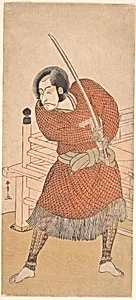
Danjuro V, in chain-mail
1786 (?)
Medium
Woodblock print (nishiki-e); ink and color on paper
Dimensions
12 7/8 x 5 3/4 in. (32.7 x 14.6 cm)
Classification
Prints
Culture & Period
Japan · Edo period (1615–1868)
Department
Asian Art
Museum
Metropolitan Museum of Art, New York, NY
Credit
The Howard Mansfield Collection, Purchase, Rogers Fund, 1936
Accession Number
JP2685
Rights
Public Domain
Tags
Art Historical Context
Step into the vibrant world of Edo-period Japan with Katsukawa Shunshō'sDanjūrō V, in Chain-Mail* (1786?), a stunning woodblock print (nish-e) from the ukiyo-e tradition. Shunshō, a leading figure in the Katsukawa school masterfully captured Ichikawajūrō V—one of kabuki's most iconic actors—posed dramatically as a fierce warrior. Clad in intricate chain-mail gripping a sword, the actor embodies the aragoto style of exaggerated, heroic roles that Danjūrō V popularized, blending theater with martial prowess. This nishiki-e, or "brocade picture," showcases Shunshō's innovative use of multiple woodblocks for layered ink and vibrant colors on paper, revolutionizing printmaking in 18th-century Japan. Produced during the Edo period (1615–1868), when urban culture flourished in cities like Edo (modern Tokyo), such yakusha-e prints celebrated kabuki stars as cultural heroes. Affordable and widely circulated, they brought theater's spectacle to everyday viewers, reflecting society's fascination with actors, swordsmen, and the floating world of entertainment. Measuring just 12⅞ × 5¾ inches, this intimate yet dynamic work from The Metropolitan Museum of Art's Asian Art collection highlights Shunshō's skill in conveying motion and personality. It's a window into how art immortalized Japan's theatrical golden age, inviting us to imagine the roar of kabuki crowds.
About the Artist
Katsukawa Shunshō 勝川春章 (Japanese) · 1726 –1792
Japanese, 1726–1792