
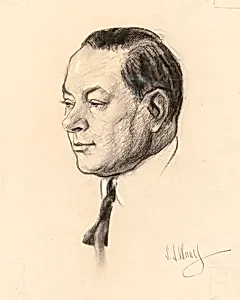
David Sarnoff
Medium
Drawing
Classification
Drawing
Department
Smithsonian Collection
Museum
Smithsonian American Art Museum
Credit
National Portrait Gallery, Smithsonian Institution; gift of Time magazine; conserved with funds from The Pritzker Traubert Family Foundation
Accession Number
NPG.78.TC724
Rights
Public Domain
Tags
About this artwork
In 1978, Time magazine donated approximately eight hundred works of original cover art to the National Portrait Gallery. The museum is dedicated to telling the stories of individuals who have shaped the United States, and the Time Collection—featuring prominent international figures and events—enriches our understanding of the United States in a global context.
Art Historical Context
In this striking 1929 drawing, Samuel Johnson Woolf captures David Sarnoff, a pioneering broadcast executive and radio industry leader who helped shape modern media. Rendered in Woolf's precise style, the portrait depicts Sarnoff in formal attire, complete with a necktie, conveying his stature as a key figure in America's burgeoning broadcasting era. Created during a time when radio was revolutionizing communication and entertainment, the work highlights Sarnoff's role in advancing technology that connected the nation. Woolf, active from 1880 to 1948, was renowned for his portrait drawings, many of which graced Time magazine covers. This piece is part of the Time Collection, donated by the magazine in 1978 to the National Portrait Gallery, Smithsonian Institution—encompassing about 800 original artworks featuring global influencers. The gift, conserved with funds from The Pritzker Traubert Family Foundation, enriches the Smithsonian American Art Museum's holdings by illustrating U.S. history through international lenses. As a drawing, the medium allowed Woolf's swift, insightful lines to distill Sarnoff's commanding presence, making it a testament to early 20th-century portraiture's power to immortalize media moguls. Visitors will appreciate how it bridges art, technology, and cultural history.