
De Passie
c. 1470 - 1491
Medium
engraving
Dimensions
164; 115
Rights
Public Domain
About this artwork
gravure
Art Historical Context
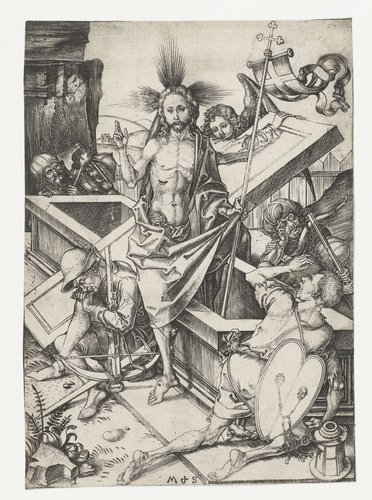
**De Passie** by Martin Schongauer created around 1470–1491, is a masterful engraving measuring 164 mm high by 115 mm wide. This intimate print captures scenes from the Passion of Christ, a central theme in late medieval devotion. Schongauer, a pioneering German artist from Colmar (modern-day France), was one of the first to elevate engraving from mere reproduction to high art, influencing masters like Albrecht Dürer. In the Northern Renaissance, engravings like this revolutionized art accessibility. Unlike paintings reserved for the elite, prints could be inked from copper plates and widely distributed, spreading religious imagery to households across Europe. Schongauer's technique shines here: his precise burin lines create intricate textures, subtle shading through cross-hatching, and dramatic contrasts that evoke deep emotion, blending Late Gothic detail with emerging Renaissance naturalism. This work underscores the era's spiritual fervor amid the Black Death's aftermath and pre-Reformation piety. Visitors will appreciate how **De Passie** not only narrates sacred suffering but also showcases engraving's enduring power to democratize beauty and faith. (178 words)
About the Artist
Martin Schongauer · 1435–1491
Martin Schongauer, born around 1450–1453 in Colmar, Alsace, emerged from a family of skilled artisans. The third of four or five sons of goldsmith Caspar Schongauer, who had relocated from Augsburg to Colmar around 1440, Martin was immersed in the goldsmith's trade from youth, likely receiving his initial training in his father's workshop—a common path for early engravers. He further honed his ski...