
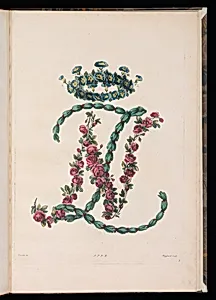
Decorative Monogram Design
ca. 1780
Classification
ornament
Department
Smithsonian Collection
Museum
Smithsonian American Art Museum
Credit
Purchased for the Museum by the Advisory Council
Accession Number
1921-6-401-3
Rights
Public Domain
About this artwork
Research in Progress
Art Historical Context
Pierre Ranson's *Decorative Monogram Design*, created around 1780, exemplifies the elegant ornamental artistry of late 18th-century France Born in 1736, Ranson was a skilled French designer whose work captured the refined aesthetic of the Ancien Régime era, before the French Revolution transformed European culture. This piece, classified as an ornament and now housed in the Smithsonian American Art Museum's collection—purchased by the Advisory Council—highlights the cross-cultural appeal of French decorative traditions, even within an American context. Monograms like this one were highly prized in Ranson's time for personalizing luxury items such as furniture, silverware, and textiles. Intertwined initials, often rendered with graceful flourishes, symbolized identity and status among the aristocracy and emerging bourgeoisie. Though the medium remains unidentified amid ongoing research, such designs were typically produced as engravings or prints, allowing widespread dissemination to artisans and craftsmen. Today, this artwork invites us to appreciate the artistry behind everyday opulence, bridging historical craftsmanship with modern design inspiration. As research progresses, it promises deeper insights into Ranson's contributions to ornamental history.