
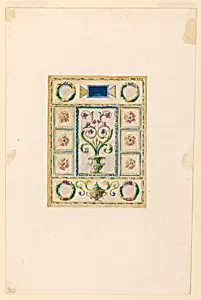
Design for a Decorative Panel
1880–1900
Classification
architecture, interiors
Department
Smithsonian Collection
Museum
Smithsonian American Art Museum
Credit
Smithsonian American Art Museum
Accession Number
1961-10-20
Rights
Public Domain
About this artwork
Research in Progress
Art Historical Context
John La Farge (1835–1910), a pioneering American artist of the Gilded Age, created *Design for a Decorative* between 1880 and 1900. This work reflects the era's fascination with lavish interior design, when wealthy patrons commissioned elaborate architectural embellishments to evoke grandeur and cultural sophistication. La Farge, trained in Europe and influenced by Japanese aesthetics and Pre-Raphaelite detail, bridged fine art and decoration, often collaborating on murals and panels for homes, churches, and public spaces. Classified under architecture and interiors in the Smithsonian American Art Museum's collection, this piece served as a preparatory design, likely envisioning intricate motifs for wall panels or room accents. Though the medium remains unidentified amid ongoing research, La Farge's signature approach—layered colors, luminous effects, and naturalistic patterns—hints at his innovative techniques, such as opalescent glass or watercolor studies that brought depth and light to American interiors. As part of the Smithsonian's holdings, it showcases La Farge's role in elevating decorative arts to high art, influencing the Aesthetic Movement and America's artistic coming-of-age. Visitors, imagine this design adorning a Victorian parlor, whispering tales of opulence and creativity. (198 words)