
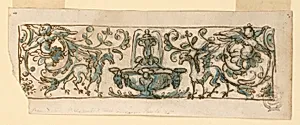
Design for a Frieze
1600–1625
Classification
ornament
Department
Smithsonian Collection
Museum
Smithsonian American Art Museum
Credit
Museum purchase through gift of various donors
Accession Number
1901-39-1220
Rights
Public Domain
About this artwork
Research in Progress
Art Historical Context
This enigmatic *Design for a Frieze dating to 1600–1625, offers a glimpse into the ornamental artistry of the early 17th century. a preparatory sketch or pattern for a frieze—a continuous decorative band often adorning architecture—this piece falls under the classification of ornament, highlighting the era's emphasis on intricate motifs to embellish buildings, furniture, or textiles. Though the artist remains unknown and the medium unidentified, its presence in the Smithsonian American Art suggests ties to early colonial American design influences, possibly drawing from European traditions adapted to the New World. Friezes like this one were essential in period architecture, symbolizing wealth, craftsmanship, and cultural aspirations during a time of exploration and settlement. The design likely features repeating patterns—floral, geometric, or figural—that would have been carved, painted, or woven into grand spaces, reflecting the blend of Renaissance opulence and emerging colonial practicality. Acquired through museum purchase with gifts from various donors, this work is part of ongoing research at the Smithsonian, inviting visitors to ponder its story. What secrets might it reveal about forgotten artisans and the decorative impulses of early America? A true treasure in progress.
About the Artist
Unknown
The artist designated as "Unknown" in our virtual museum's collection exemplifies a poignant chapter in art history: creators whose identities have faded into obscurity despite the enduring power of their work. With only one known artwork attributed to them in our holdings, this figure represents countless anonymous hands that shaped visual culture across centuries. Museums worldwide, including th...