
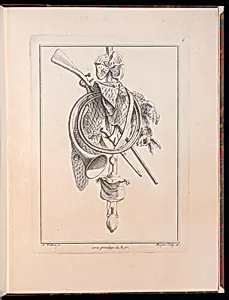
Design for a Hunting Trophy
Classification
Department
Smithsonian Collection
Museum
Smithsonian American Art Museum
Credit
Purchased for the Museum by the Advisory Council
Accession Number
1921-6-494-6
Rights
Public Domain
About this artwork
Research in Progress
Art Historical Context
Antoine Watteau’s “Design for a Hunting Trophy,” created around 1735, captures the refined elegance of early eighteenth-century French decorative art. Although Watteau himself passed away in 1721, this print preserves his inventive approach to ornamental design. Known for pioneering the lighthearted fêtes galantes style, Watteau often blended natural motifs with playful sophistication, and this work likely reflects his talent for transforming everyday themes—such as hunting—into graceful compositions suited for aristocratic interiors. As a print in the Smithsonian American Art Museum’s collection, the piece highlights the important role reproductive prints played in spreading Watteau’s influence across Europe. Designs like this were frequently adapted for tapestries, ceramics, and furniture, bringing the Rococo spirit of movement and delicacy into everyday luxury objects. The hunting trophy subject would have appealed to noble patrons who valued the chase as both sport and symbol of status. Though details about the medium remain under study, the print stands as a testament to Watteau’s lasting impact on French art. It invites viewers to appreciate how even a preparatory design could embody the era’s taste for beauty, wit, and harmonious decoration.