
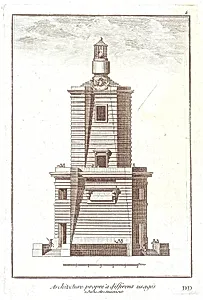
Design for a Lighthouse
Classification
architecture
Department
Smithsonian Collection
Museum
Smithsonian American Art Museum
Credit
Purchased for the Museum by the Advisory Council
Accession Number
1921-6-293-4
Rights
Public Domain
About this artwork
Research in Progress
Art Historical Context
This "Design for a Lighthouse" by A. Le Canu, a French artist active from 1746 to 1768, dates to 1760–75 and forms part of the Smithsonian American Art Museum's architecture collection. Acquired through purchase by the Advisory Council, the work is a conceptual design rather than a finished structure. The medium remains unknown, with research still in progress, yet it clearly belongs to the tradition of 18th-century architectural drawings that visualized ambitious public projects. Created in France during the mid-Enlightenment, the design reflects a period when artists and engineers collaborated on maritime infrastructure. Lighthouses were essential for guiding ships along busy coasts, and drawings like this one allowed creators to explore both practical engineering and visual elegance before construction began. Le Canu’s contribution offers a window into how French designers approached these vital yet aesthetically considered buildings. Today the piece invites museum visitors to consider the blend of artistry and utility that defined architectural practice of the era. It stands as a reminder that many historic structures first existed as imaginative proposals on paper, capturing ideas that shaped the built world.