
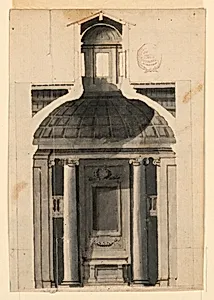
Section of an Apse
1800–1815
Classification
religion
Department
Smithsonian Collection
Museum
Smithsonian American Art Museum
Credit
Museum purchase through gift of various donors
Accession Number
1901-39-1481
Rights
Public Domain
About this artwork
Research in Progress
Art Historical Context
This intriguing fragment, titled *Section of an Apse*, offers a glimpse into early 19th-century American religious architecture. Dating from 1800–1815, it represents a portion of an apse—the semicircular recess typically found at the eastern end of a church, housing the altar and serving as a focal point for worship. Acquired through museum purchase with gifts from various donors, it now resides in the Smithsonian American Art Museum's collection, classified under religion. Crafted during a period of rapid church construction in the young United States, amid the Second Great Awakening's fervent revivals, this piece reflects the era's emphasis on sacred spaces that inspired communal faith. Though the artist and medium remain unknown— with research ongoing—its survival as a standalone section highlights the fragility of architectural art from this time, often lost to renovations or decay. For visitors, this artifact invites curiosity about everyday devotional art in early America, bridging architecture and spirituality. As studies progress, it promises to reveal more about regional craftsmanship and cultural devotion in the early republic.
About the Artist
Unknown
The artist designated as "Unknown" in our virtual museum's collection exemplifies a poignant chapter in art history: creators whose identities have faded into obscurity despite the enduring power of their work. With only one known artwork attributed to them in our holdings, this figure represents countless anonymous hands that shaped visual culture across centuries. Museums worldwide, including th...