
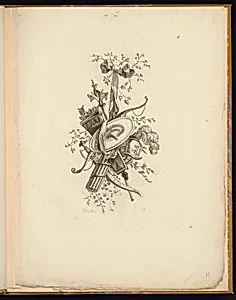
Design for a Pendant Trophy
Classification
Department
Smithsonian Collection
Museum
Smithsonian American Art Museum
Credit
Purchased for the Museum by the Advisory Council
Accession Number
1921-6-382-11
Rights
Public Domain
About this artwork
Research in Progress
Art Historical Context
Jean-Baptiste Pillement, a French artist of the Rococo era (1728–1808), created this *Design for a Pendant Trophy between 1772 and 1777. Known for his intricate decorative motifs, flowing landscapes, and chinoiser influences, Pillement bridged the ornate exuberance of Rococo with emerging Neoclassical tastes. This print, now in the Smithsonian American Art Museum's collection, his skill in ornamental design likely intended as a blueprint for luxurious jewelry or a ceremonial trophy pendant—symbols of prestige in 18th-century European courts and elite circles. As a print from an unknown medium, the work highlights the era's reproductive techniques, such as etching or engraving, which allowed artists like Pillement to disseminate elaborate designs to goldsmiths, jewelers, and manufacturers across Europe. Pillement's style features delicate, asymmetrical flourishes and fantastical elements, evoking the playful elegance of Versailles-era decoration. Purchased for the museum by the Advisory Council, it offers a glimpse into the collaborative world of design, where sketches fueled the opulent decorative arts trade. Though research continues, this piece underscores Pillement's versatility—he worked in Poland, England, and Portugal, influencing tapestries and wallpapers. For visitors, it invites reflection on how 18th-century fashion intertwined art, status, and craftsmanship.