
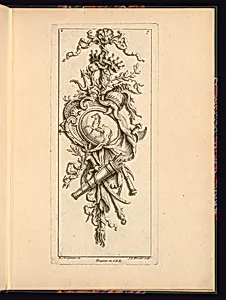
Design for a Pendant Trophy
Classification
Department
Smithsonian Collection
Museum
Smithsonian American Art Museum
Credit
Purchased for the Museum by the Advisory Council
Accession Number
1921-6-519-15
Rights
Public Domain
About this artwork
Research in Progress
Art Historical Context
**Design for a Pendant Trophy by René CharpentierFrench, 1680–1723) offers a glimpse into the ornate world of 18th French decorative arts. Created as a print between 1738 and 1761—likely posthumously, given the artist's death in 1723—this design captures the elegance of a pendant trophy, a suspended ornamental motif often used in jewelry, architecture, or luxury objects. Charpentier, a skilled engraver, specialized in intricate patterns that bridged the late Baroque and emerging Rococo styles, blending symmetry with playful flourishes. As a print, this work served a practical purpose: disseminating designs to goldsmiths, jewelers, and craftsmen across Europe. Such patterns fueled the opulent tastes of the French aristocracy during Louis XV's reign, when trophies—symbolizing victory or abundance—adorned everything from brooches to furniture. The unknown medium underscores ongoing research, inviting us to appreciate its role in the printmaking tradition that democratized high design. Now in the Smithsonian American Art Museum's collection, purchased by the Advisory Council, this piece highlights transatlantic exchange in artistic ideas. Though details are still emerging, it reminds visitors of how a single design could inspire lavish creations, echoing the creativity of France's golden age of ornament.