
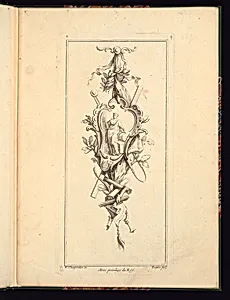
Design for a Pendant Trophy
Medium
Classification
Department
Smithsonian Collection
Museum
Smithsonian American Art Museum
Credit
Purchased for the Museum by the Advisory Council
Accession Number
1921-6-519-7
Rights
Public Domain
About this artwork
Research in Progress
Art Historical Context
René Charpentier (1680–1723), a skilled French engraver, created this *Design for a Pendant Trophy around 1736, shortly after his death, suggesting it may represent a posthumous print or a design realized by his studio. As a print, this work exemplifies the era's use of engraving to disseminate intricate ornamental patterns for luxury goods like jewelry or decorative trophies. Prints were vital in 18th-century Europe, allowing artisans across workshops to replicate elaborate motifs efficiently, bridging fine art and craft. Housed in the Smithsonian American Art Museum's collection, acquired through the Advisory Council, this piece reflects the opulent decorative arts of early Rococo France. Charpentier's style often featured dynamic, fantastical elements suited for pendants—imagine scrolling forms, symbolic trophies evoking victory or prestige, perfect for elite adornment. Though research continues, it highlights how such designs fueled the decorative boom, influencing goldsmiths and jewelers in Versailles-era courts. Visitors, picture wearing this as a lavish necklace: a testament to printmaking's role in democratizing high design! (178 words)