
Design for a stained glass window
1866–92
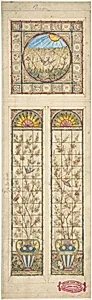
Medium
Watercolor, pen and brown ink, over graphite
Dimensions
sheet: 13 3/16 x 4 in. (33.5 x 10.2 cm)
Classification
Drawings|Ornament & Architecture
Department
Drawings and Prints
Museum
Metropolitan Museum of Art, New York, NY
Credit
The Elisha Whittelsey Collection, The Elisha Whittelsey Fund, 1953
Accession Number
53.502.6
Rights
Public Domain
Tags
Art Historical Context
This delicate design for a stained glass window, created by British artist Alexander Gibbs between 1866 and 1892, exemplifies the Victorian era's fascination with ornate ecclesiastical and decorative arts. Gibbs, a prominent figure in London's stained glass workshops, specialized in producing luminous windows for churches and grand homes during the Gothic Revival movement. Rendered in watercolor, pen and brown ink over graphite on a slender sheet measuring just 13 3/16 x 4 inches, this preparatory drawing served as a blueprint for crafting vibrant, light-filtering panels that would transform architecture into storytelling spectacles. The composition likely features an elegant interplay of birds and plants, motifs symbolizing nature's harmony and divine creation—common in 19th-century stained glass to evoke spiritual uplift. Gibbs' precise graphite underdrawing, enhanced by fluid ink lines and subtle watercolor washes, allowed artisans to translate the design into molten glass, lead cames, and vivid pigments fired for enduring brilliance. Housed in the Metropolitan Museum of Art's Drawings and Prints department, this work highlights the meticulous craft behind the era's architectural ornamentation, bridging fine art and functional beauty. Visitors can appreciate how such designs illuminated Victorian spaces with color and symbolism, a testament to Gibbs' enduring legacy in ornamental design.