
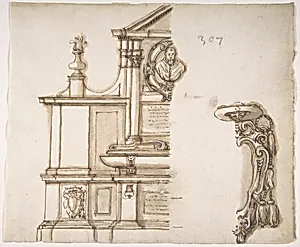
Design for a Tomb for a Cardinal
Medium
Pen and brown ink, brush and brown wash
Dimensions
sheet: 8 11/16 x 10 1/2 in. (22 x 26.7 cm)
Classification
Drawings
Department
Drawings and Prints
Museum
Metropolitan Museum of Art, New York, NY
Credit
The Elisha Whittelsey Collection, The Elisha Whittelsey Fund, 1949
Accession Number
49.19.22
Rights
Public Domain
Tags
Art Historical Context
This intricate *Design for a Tomb for Cardinal*, attributed to the renowned French architect Jacques Androu du Cerceau or an anonymous 16th contemporary, captures the grandeur of Renaissance ecclesiastical architecture. Created around the mid-1500s using pen and brown ink with brush and brown wash on modest 8 11/16 x 10 1/2-inch sheet, it sketches an elaborate tomb likely intended for a high-ranking Catholic cleric. Du Cerceau, a master of ornamental design and author of influential architectural treatises like *Le Premier Volume des Plus Excellents Bastiments de France*, blended Italian Renaissance motifs with French flair, evident in the tomb's dynamic proportions and decorative elements. In 16th-century France, during the reign of kings like Francis I, tomb designs symbolized both spiritual authority and humanistic ideals. Cardinals, as princes of the Church, commissioned opulent monuments that fused Gothic traditions—such as arched canopies—with emerging Mannerist flourishes like twisted columns and sculpted figures. This drawing exemplifies preparatory work for monumental sculpture, showcasing how architects visualized three-dimensional spaces on paper through precise linework and subtle washes for depth and shadow. Housed in the Metropolitan Museum of Art's Drawings and Prints department, this piece highlights the era's innovative draftsmanship, bridging architecture and fine art. Visitors can appreciate how such sketches fueled the lavish funerary art that adorned cathedrals, reflecting the Catholic Church's enduring cultural dominance amid Reformation tensions.