
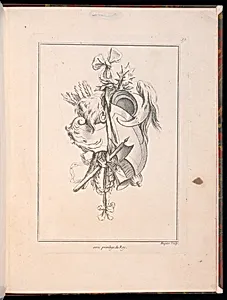
Design for a Trophy
Classification
Department
Smithsonian Collection
Museum
Smithsonian American Art Museum
Credit
Purchased for the Museum by the Advisory Council
Accession Number
1921-6-494-12
Rights
Public Domain
About this artwork
Research in Progress
Art Historical Context
Antoine Watteau’s “Design for a Trophy” captures the refined elegance of early eighteenth-century French decorative art. Although Watteau himself passed away in 1721, this print—dated around 1735—preserves one of his inventive designs for an ornamental trophy, a form often created to celebrate military or courtly achievements. As a leading figure of the Rococo movement, Watteau infused even functional objects with lightness, theatricality, and graceful line, transforming a trophy into an airy composition of flowing ribbons, delicate foliage, and poised figures. Printed works like this played an important role in spreading artistic ideas across Europe. Collectors and artisans could study Watteau’s fluid draftsmanship through engravings long after the original drawing had left his studio. Housed today in the Smithsonian American Art Museum, the sheet reminds visitors how Rococo taste reached beyond painting into the realms of silver, porcelain, and interior ornament. While research on the precise technique and publication history continues, the print stands as a charming testament to Watteau’s enduring influence on French design.