
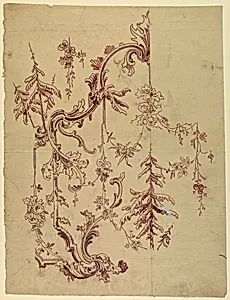
Design for a Woven or Printed Fabric or Wallaper
1815–1840
Classification
Drawing
Department
Smithsonian Collection
Museum
Smithsonian American Art Museum
Credit
Gift of Eleanor and Sarah Hewitt
Accession Number
1909-13-120
Rights
Public Domain
About this artwork
Research in Progress
Art Historical Context
Step into the early 19th century with intriguing *Design for a Woven Printed Fabric or Wallpaper*, between 1815 and 1840. During this vibrant period in American history—following the War of 2 and amid rapid industrialization—domestic interiors flourished as a new middle class embraced affordable decorative arts. Wallpaper and textiles transformed homes into personal statements of style, blending European influences like neoclassicism with emerging American ingenuity. This drawing, classified as a preparatory sketch from the Smithsonian Collection, captures that creative spark, offering a window into the design process that brought pattern and color to everyday life. Though the artist remains unknown and research is ongoing, the work's significance lies in its role within the decorative arts movement. As a blueprint for woven or printed materials, it likely employed precise line work typical of period drafts—perhaps pen, ink, or watercolor on paper—to envision repeating motifs for production. Such designs fueled the textile boom in cities like Philadelphia and New York, where factories adapted European techniques for local tastes, emphasizing florals, geometrics, or patriotic symbols. Generously gifted to the Smithsonian American Art Museum by Eleanor and Sarah Hewitt, pioneering collectors of design, this piece invites us to ponder the unsung makers behind America's ornamental heritage. Ongoing research promises to unveil more about its story, reminding us how even anonymous sketches shaped the beauty of 19th-century homes.
About the Artist
Unknown
The artist designated as "Unknown" in our virtual museum's collection exemplifies a poignant chapter in art history: creators whose identities have faded into obscurity despite the enduring power of their work. With only one known artwork attributed to them in our holdings, this figure represents countless anonymous hands that shaped visual culture across centuries. Museums worldwide, including th...