
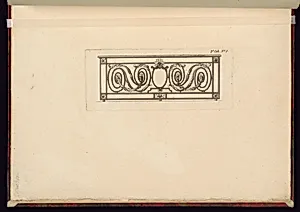
Design for an Iron Balcony
Classification
Department
Smithsonian Collection
Museum
Smithsonian American Art Museum
Credit
Purchased for the Museum by the Advisory Council
Accession Number
1921-6-244-11
Rights
Public Domain
About this artwork
Research in Progress
Art Historical Context
**Design for an Iron Bal** Gabriel Bonthomme, French artist active around 5, crafted this intricate print in 1777 a blueprint for an elegant iron balcony. Captured during the late Enlightenment era in France—just a decade before the Revolution—this design reflects the era's fascination with refined metalwork adorning grand townhouses and public spaces in Paris and beyond. As a print, it served a practical purpose: disseminating architectural ideas to craftsmen, enabling precise replication of ornate scrolls, balusters, and flourishes that defined urban sophistication. Iron balconies were more than functional; they were status symbols, blending artistry with engineering in a medium prized for its durability and malleability. Bonthomme's work exemplifies how prints revolutionized design dissemination, turning visionary sketches into widespread reality. Though the exact technique remains under study, such engravings or etchings were essential tools for architects and ironworkers, bridging creativity and construction. Today, housed in the Smithsonian American Art Museum—purchased by the Advisory Council—this piece underscores the enduring allure of 18th-century decorative arts. It invites us to imagine the lively streets of ancien régime France, where every railing told a story of elegance and innovation. Research continues to uncover more about Bonthomme's oeuvre, promising fresh insights into this graceful artifact.