
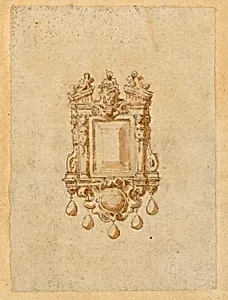
Design for brooch with couped pediment and diamond
16th century
Medium
jewelry
Classification
jewelry
Department
Smithsonian Collection
Museum
Smithsonian American Art Museum
Credit
Museum purchase through gift of various donors and from Eleanor G. Hewitt Fund
Accession Number
1938-88-5004
Rights
Public Domain
About this artwork
Research in Progress
Art Historical Context
This exquisite 16th-century design a brooch, featuring a couped pediment and diamond offers a glimpse into Renaissance-era jewelry craftsmanship. Housed in the Smithsonian American Art Museum's, the piece—acquired through museum purchase and donor gifts—is a preparatory drawing that captures the era's blend of architectural elegance and gemstone splendor. The "couped pediment," referring to a cleanly severed triangular motif inspired by classical architecture, evokes pediments of ancient temples, symbolizing grandeur and symmetry in a wearable form. During the 16th century, jewelry designs like this reflected the Renaissance revival of antiquity, where artists and goldsmiths drew from Greco-Roman motifs to create status symbols for Europe's elite. Diamonds, newly fashionable due to improved cutting techniques from centers like Antwerp, added brilliance and rarity, often set en cabochon or early faceted styles to maximize their fire. Brooches served practical yet ostentatious purposes, fastening garments while displaying wealth and taste. Though the artist remains unknown and research continues, this design highlights the ingenuity of period jewelers, bridging art, architecture, and adornment. It invites us to imagine the finished jewel sparkling on a noble's doublet, a tiny testament to humanism's ornate legacy. (198 words)
About the Artist
Unknown
The artist designated as "Unknown" in our virtual museum's collection exemplifies a poignant chapter in art history: creators whose identities have faded into obscurity despite the enduring power of their work. With only one known artwork attributed to them in our holdings, this figure represents countless anonymous hands that shaped visual culture across centuries. Museums worldwide, including th...