
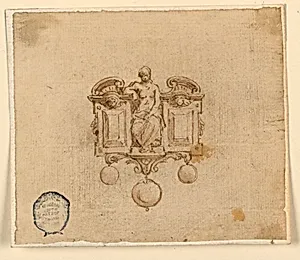
Design for Brooch with Woman in Broken Pedimet
16th century
Medium
jewelry
Classification
jewelry
Department
Smithsonian Collection
Museum
Smithsonian American Art Museum
Credit
Museum purchase through gift of various donors
Accession Number
1901-39-780
Rights
Public Domain
About this artwork
Research in Progress
Art Historical Context
Step into the Renaissance world with this captivating *Design for Brooch with Woman in Pediment*, a 16th-century sketch from an unknown artist. Crafted as a preparatory drawing for jewelry, it features a graceful female figure framed within a broken pediment—a distinctive architectural motif with a curved or interrupted triangular top, evoking the ornate frames of grand palaces and altars. Such designs highlight the era's fusion of sculpture, architecture, and personal adornment, turning wearable art into miniature masterpieces. In the 16th century brooches were prized status symbols among Europe's elite, often incorporating symbolic figures like this enigmatic woman, possibly representing virtue, mythology, or portraiture. Jewelry designs on paper allowed goldsmiths and enamelists to refine intricate details before execution in precious metals or gems, showcasing the technical precision of Renaissance workshops. The broken pediment, popularized in Italian Renaissance architecture, added dramatic flair and asymmetry, bridging fine art and decorative objects. Housed in the Smithsonian American Art Museum's Smithsonian Collection (museum purchase through gifts from various donors), this piece awaits further research, inviting us to ponder its untold stories. A testament to the artistry of everyday luxury, it reminds visitors how Renaissance ingenuity adorned both bodies and minds.
About the Artist
Unknown
The artist designated as "Unknown" in our virtual museum's collection exemplifies a poignant chapter in art history: creators whose identities have faded into obscurity despite the enduring power of their work. With only one known artwork attributed to them in our holdings, this figure represents countless anonymous hands that shaped visual culture across centuries. Museums worldwide, including th...