
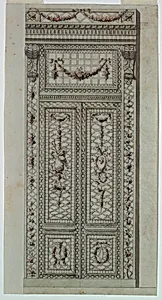
Design for cast metal and colored folding doors
ca. 1785
Classification
architecture
Department
Smithsonian Collection
Museum
Smithsonian American Art Museum
Credit
Purchased for the Museum by the Advisory Council
Accession Number
1911-28-82-1
Rights
Public Domain
About this artwork
Research in Progress
Art Historical Context
Step into the inventive world of late 18th-century American design with this intriguing *Design for cast metal and colored folding*, created around 1785. Housed in the Smithsonian American Art Museum Smithsonian Collection and classified as architecture, this work represents a visionary blueprint for functional yet decorative interior elements. Though the artist remains unknown and research is ongoing, the title hints at a bold concept: folding doors crafted from cast metal—durable and innovative for the era—and enhanced color, likely for aesthetic appeal in or public spaces. In the post-Revolutionary United States, such designs reflected a growing ambition sophisticated architecture inspired by European neoclassicism, while adapting to practical American needs. Folding doors offered versatile space division, and using cast metal suggested advancements in foundry techniques, making ornate barriers more accessible than carved wood or stone. The addition of color would have brought vibrancy to interiors, blending utility with artistry. Purchased for the museum by the Advisory Council, this piece invites us to ponder early industrial creativity. As research progresses, it stands as a testament to the unsung innovators shaping America's built environment. (198 words)
About the Artist
Unknown
The artist designated as "Unknown" in our virtual museum's collection exemplifies a poignant chapter in art history: creators whose identities have faded into obscurity despite the enduring power of their work. With only one known artwork attributed to them in our holdings, this figure represents countless anonymous hands that shaped visual culture across centuries. Museums worldwide, including th...