
Design for Corner Motif for Woven or Embroidered Border
1820–50
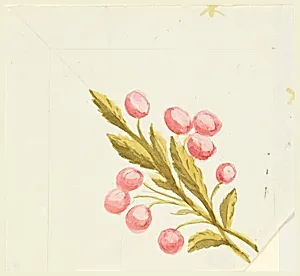
Medium
textile designs
Classification
textile designs
Department
Smithsonian Collection
Museum
Smithsonian American Art Museum
Credit
Gift of Eleanor and Sarah Hewitt
Accession Number
1909-13-128
Rights
Public Domain
About this artwork
Research in Progress
Art Historical Context
This delicate *Design for Corner Motif Woven or Embro Border*, created between 1820 and 1850, offers a glimpse into the artistry of early 19th-century American textile. As an anonymous design from the Smithsonian American Art Museum's collection—generously gifted by collectors Eleanor and Sarah Hewitt—it represents the meticulous planning behind decorative borders used in household linens, garments, and furnishings. During this antebellum era, such motifs adorned everything from tablecloths to dress trims, blending functionality with ornamentation in everyday life. Textile designs like this one highlight the era's growing emphasis on domestic crafts, where women often played key roles in embroidery and weaving. The corner motif, a focal point for symmetrical patterns, would have been adapted for looms or needles, showcasing techniques that balanced intricate detailing with practical repeatability. Though the artist's identity remains unknown and research is ongoing, it reflects broader cultural trends in American decorative arts, influenced by European imports and emerging national styles. Today, this piece invites us to appreciate the unsung creativity of textile designers, whose work wove beauty into the fabric of daily American life. (178 words)
About the Artist
Unknown
The artist designated as "Unknown" in our virtual museum's collection exemplifies a poignant chapter in art history: creators whose identities have faded into obscurity despite the enduring power of their work. With only one known artwork attributed to them in our holdings, this figure represents countless anonymous hands that shaped visual culture across centuries. Museums worldwide, including th...