
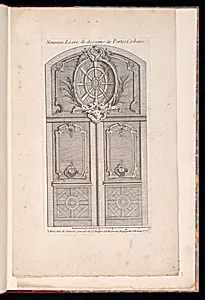
Design for Doors for a Porte Cochère
late 17th–early 18th century
Classification
Department
Smithsonian Collection
Museum
Smithsonian American Art Museum
Credit
Purchased for the Museum by the Advisory Council
Accession Number
1921-6-415-1
Rights
Public Domain
About this artwork
Research in Progress
Art Historical Context
Nicolas Guérard (ca. 1648–1719), a skilled French engraver and designer created this *Design for Doors for a Cochère* in the late 17th early 18th century, a golden age of French Baroque opulence under Louis XIV. A porte cochère was a grand, covered carriage entrance to aristocratic châteaux or urban hôtels, symbolizing wealth and status. Guér intricate print captures the era's love for elaborate architectural ornamentation, likely featuring scrolling motifs, mythological figures, or floral grotesques typical of his reproductive engravings. As a classified print—though the exact medium awaits further research—this work exemplifies how such designs were disseminated through affordable reproductions. Architects, craftsmen, and patrons could reference them to execute lavish ironwork or carved doors, blending functionality with artistic flair. Guérard's style reflects the transition from High Baroque exuberance to the more refined Régence taste, influencing decorative arts across Europe. Now housed in the Smithsonian American Art Museum, purchased by the Advisory Council, this piece invites us to imagine the thunder of carriage wheels beneath its ornate panels. Ongoing research promises deeper insights into its techniques and commissions, highlighting the enduring allure of 18th-century French design.