
Design for Doors
late 18th century
Classification
Department
Smithsonian Collection
Museum
Smithsonian American Art Museum
Credit
Purchased for the Museum by the Advisory Council
Accession Number
1921-6-236-16
Rights
Public Domain
About this artwork
Research in Progress
Art Historical Context
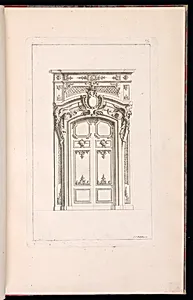
**Design for Doors** by Thomas Lainé (1682–1739), a French engraver and ornamental designer, captures the elegance of early 18th-century decorative arts. Though dated to the late 18th century, this print likely reflects Lainé's influential rococo-style motifs, characterized by intricate scrolling foliage, asymmetrical flourishes, and playful symmetry—hallmarks of the opulent interiors popular among French aristocracy during Louis XV's reign. As a design for doors, it would have guided craftsmen in creating grand architectural elements that blended functionality with lavish ornamentation. Printed works like this were vital in disseminating designs across Europe, allowing architects, cabinetmakers, and decorators to replicate sophisticated patterns without direct patronage. Lainé's engravings bridged the gap between elite workshops and wider audiences, influencing furniture and paneling from Versailles-inspired salons to bourgeois homes. The unknown medium underscores its classification as a print, emphasizing reproduction over uniqueness. Acquired for the Smithsonian American Art Museum through the Advisory Council's purchase, this piece from the Smithsonian Collection highlights transatlantic appreciation for French design traditions. With research ongoing, it invites visitors to ponder how such blueprints shaped everyday luxury in the Age of Enlightenment.