
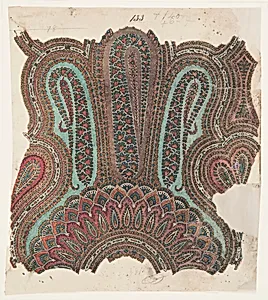
Design for Machine-Woven Shawl
ca. 1840
Classification
textile designs
Department
Smithsonian Collection
Museum
Smithsonian American Art Museum
Credit
Museum purchase through gift of Mrs. Richard Irvin
Accession Number
1940-88-2
Rights
Public Domain
About this artwork
Research in Progress
Art Historical Context
This elegant *Design for Machine-Wovenl*, created around 1840, offers a glimpse into America's burgeoning textile industry during the early Industrial Revolution. At a time when mechanized looms were transforming fashion from elite craftsmanship to mass production, such designs bridged artistry and industry. Shawls were coveted accessories, evoking the luxurious paisley inspired by imported cashmere from India and Scotland, but machine-weaving made them affordable for a wider American audience. As a textile design from the Smithsonian American Art Museum's collection—acquired through a generous museum purchase—this piece highlights the ingenuity of anonymous designers who fueled economic growth. Though the exact medium remains under study (research in progress), it exemplifies the precision required for Jacquard looms, which used punched cards to automate intricate patterns. These innovations not only democratized style but also spurred regional mills, like those in New England, shaping everyday elegance. Today, this artifact invites us to appreciate the unsung heroes of 19th-century design, where functionality met beauty in the warp and weft of progress.
About the Artist
Unknown
The artist designated as "Unknown" in our virtual museum's collection exemplifies a poignant chapter in art history: creators whose identities have faded into obscurity despite the enduring power of their work. With only one known artwork attributed to them in our holdings, this figure represents countless anonymous hands that shaped visual culture across centuries. Museums worldwide, including th...