
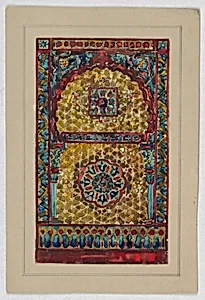
Design for stained glass
late 19th century
Classification
architecture, interiors
Department
Smithsonian Collection
Museum
Smithsonian American Art Museum
Credit
Gift of Alice C. Morse
Accession Number
2009-6-20
Rights
Public Domain
About this artwork
Research in Progress
Art Historical Context
Alice Cordelia Morse (1863–1961), an American artist active during the late 19 century, created this *Design for Stained Glass* amid a vibrant era of architectural revival and craftsmanship. Born in the post-Civil War United States, Morse specialized in arts, contributing to the growing interest in ornate interiors influenced by the Arts and Crafts and Gothic Revival styles. Her work reflects a time when stained glass transitioned from ecclesiastical settings to secular homes and public buildings, symbolizing beauty, light, and skilled artistry. As a preparatory design classified under architecture and interiors, this piece likely outlines patterns for vibrant, translucent panels that would filter sunlight into jewel-like colors—a technique rooted in medieval traditions but revitalized by 19th-century innovators. Though the exact medium remains unknown and research is ongoing, Morse's designs highlight the meticulous planning required for leaded glasswork, where pigments fused into glass create enduring luminosity. Donated by the artist herself to the Smithsonian American Art Museum, it offers a glimpse into women's expanding roles in American design. This artifact underscores the cultural value of stained glass as both functional art and status symbol, inviting visitors to imagine its glow illuminating period rooms. (198 words)