
Design for the Interior Elevation of a Theater
ca. 1800
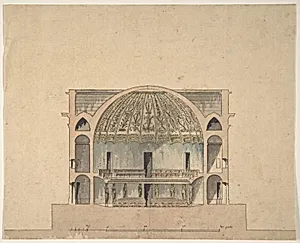
Medium
Pen and black ink, watercolor
Dimensions
sheet: 5 1/4 x 6 9/16 in. (13.4 x 16.6 cm)
Classification
Drawings|Ornament & Architecture
Department
Drawings and Prints
Museum
Metropolitan Museum of Art, New York, NY
Credit
The Elisha Whittelsey Collection, The Elisha Whittelsey Fund, 1949
Accession Number
49.50.163
Rights
Public Domain
Tags
Art Historical Context
Step into the imaginative world of early 19th-century French theater design with this exquisite drawing, *Design for the Interior Elevation a Theater* (ca. 1800). Created amid the cultural fervor following the French Revolution, it presents a precise elevation view of a grand theater interior showcasing the era's passion for neoclassical splendor. Theaters were vital social hubs during this time, blending public spectacle with architectural innovation under Napoleonic influence. Rendered in pen and black ink with watercolor on a modest 5¼ x 6⅜-inch sheet, the work highlights meticulous line work for structural clarity and subtle color washes to evoke luxurious materials like marble and gilt. Striking caryatids—graceful female figures serving as columns—support ornate balconies and proscenium arches, drawing from ancient Greek motifs revived in French Empire style. These elements underscore the drawing's role in the architectural design process, where ornament elevated functionality into art. Housed in the Metropolitan Museum of Art's Elisha Whittelsey Collection, this gem from the Drawings and Prints department offers a window into how architects envisioned immersive spaces for opera and drama, merging engineering precision with theatrical drama. A testament to the unsung creativity of the period!
About the Artist
Anonymous, French, 19th century · 1800–1900
**Anonymous, French, 19th Century (ca. 1800–1900)** The artist cataloged as Anonymous, French, 19th century embodies the enigmatic yet essential contributions of unidentified creators to France's vibrant 19th-century art world. Active roughly between 1800 and 1900, this figure—or potentially collective workshop—produced a diverse array of works amid the nation's transition from Neoclassicism thro...