
Design for Tomb Monument
18th century
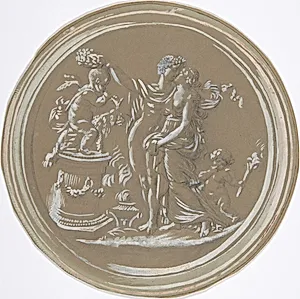
Medium
Graphite and gouache
Dimensions
image: 6 5/16 in. (16 cm)
Classification
Drawings
Department
Drawings and Prints
Museum
Metropolitan Museum of Art, New York, NY
Credit
Gift of Emma Avery Welcher and Amy Ogden Welcher, 1965
Accession Number
65.639.14
Rights
Public Domain
Tags
Art Historical Context
This delicate *Design for Tomb Monument*, created by an anonymous French artist in the 18th century, offers a glimpse into the ornate funerary art of the Rococo era. Rendered in graphite and gouache on paper—measuring just 6 5/16 inches (16 cm)—it exemplifies the preparatory sketches used by architects and sculptors to plan grand memorials. Gouache, with its opaque, vibrant pigments, allowed for vivid rendering of forms, while graphite provided precise underdrawing, highlighting the technical finesse of French draftsmanship during a time when elaborate tombs honored the elite. The composition likely features idealized figures of men, women, and playful putti (cherubic children symbolizing innocence or divine love), common motifs in 18th-century European funerary designs. These elements evoked themes of mourning, virtue, and eternal life, blending classical influences with the era's decorative exuberance. Such drawings were essential for commissions at churches or private estates, reflecting France's cultural emphasis on theatrical commemoration amid the Enlightenment's shift toward neoclassicism. Generously gifted to the Metropolitan Museum of Art in 1965 by Emma Avery Welcher and Amy Ogden Welcher, this work from the Drawings and Prints department invites us to appreciate the artistry behind enduring stone monuments, bridging ephemeral sketches with lasting legacy.
About the Artist
Anonymous, French, 18th century · 1700–1800
The artist known as Anonymous, French, 18th century, represents a collective of unidentified talents active roughly between 1700 and 1800, a period of profound artistic evolution in France from the opulent Rococo to the austere dawn of Neoclassicism and Revolutionary fervor. Little is documented about their personal training or mentors, as their anonymity obscures individual biographies, though th...