
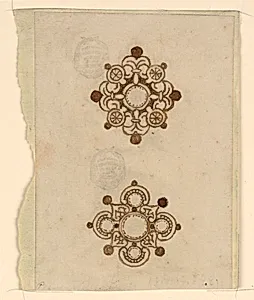
Design for Two Brooches
1820–30
Classification
jewelry
Department
Smithsonian Collection
Museum
Smithsonian American Art Museum
Credit
Museum purchase through gift of various donors
Accession Number
1901-39-748
Rights
Public Domain
About this artwork
Research in Progress
Art Historical Context
### Design for Two Brooches*ca. 1820–1830* *Unknown artist* *Smithsonian American Art Museum, Museum purchase through gift of various donors* This design sketch for two brooches offers a glimpse into early th-century American jewelry fashion, created around 1820–1830. As a preparatory drawing from the Smithsonian American Art Museum's collection, captures the elegance of an era when personal adornments like brooches were essential accessories for women, often pinned to shawls, dresses, or collars. Though the artist remains unknown and research is ongoing, such designs highlight the craftsmanship of the time, bridging European influences with emerging American tastes during the young nation's post-War of 1812 optimism. In the 1820s and 1830s, jewelry designs reflected neoclassical motifs—think graceful curves, floral elements, or classical cameos—transitioning toward the more ornate Romantic styles of the Victorian age. Brooches served not just as fashion statements but as symbols of sentimentality, status, or affection, frequently incorporating gems, gold, or enamel in final pieces. This artwork, classified as jewelry within the Smithsonian Collection, underscores the design process itself: a thoughtful blueprint that would guide jewelers in translating paper visions into wearable art. Preserved through museum purchase and donor gifts, this piece invites us to ponder everyday artistry from two centuries ago. Ongoing research promises to reveal more about its creator and context, enriching our understanding of America's decorative arts heritage. (198 words)
About the Artist
Unknown
The artist designated as "Unknown" in our virtual museum's collection exemplifies a poignant chapter in art history: creators whose identities have faded into obscurity despite the enduring power of their work. With only one known artwork attributed to them in our holdings, this figure represents countless anonymous hands that shaped visual culture across centuries. Museums worldwide, including th...