
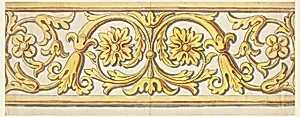
Design for Woven Horizontal Border
1800–1830
Classification
textile designs
Department
Smithsonian Collection
Museum
Smithsonian American Art Museum
Credit
Gift of Eleanor and Sarah Hewitt
Accession Number
1909-13-125
Rights
Public Domain
About this artwork
Research in Progress
Art Historical Context
This enchanting *Design for Woven Horizontal*, created between 1800 and 1830, offers a glimpse into the artistry of early American textile production. Housed in the Smithsonian American Art Museum's as a gift from Eleanor and Sarah Hewitt, piece is classified among textile designs, though its exact medium awaits further research. As an anonymous creator's vision, it exemplifies the skilled pattern-making that adorned fabrics for clothing, furnishings, and decorative trims during America's formative decades. In the early 19th century, horizontal borders like this one were essential elements in woven textiles, often used as edgings for shawls, table linens, or drapery. They reflected the era's blend of European influences—such as neoclassical motifs—and burgeoning American ingenuity, when domestic textile arts flourished amid industrialization. These designs were meticulously planned for looms, balancing intricate patterns with practical weave structures to ensure durability and beauty. Though research continues, this artifact highlights the unsung role of textile designers in shaping everyday aesthetics. Visitors can appreciate how such borders brought elegance to homes, bridging craftsmanship and culture in a young nation. (198 words)
About the Artist
Unknown
The artist designated as "Unknown" in our virtual museum's collection exemplifies a poignant chapter in art history: creators whose identities have faded into obscurity despite the enduring power of their work. With only one known artwork attributed to them in our holdings, this figure represents countless anonymous hands that shaped visual culture across centuries. Museums worldwide, including th...