
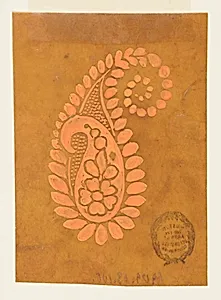
Design for Woven Paisley
1825–40
Classification
textile designs
Department
Smithsonian Collection
Museum
Smithsonian American Art Museum
Credit
Gift of Eleanor and Sarah Hewitt
Accession Number
1909-13-100
Rights
Public Domain
About this artwork
Research in Progress
Art Historical Context
This exquisite *Design for Woven Pais* from 1825–40 captures the height of "Paisley mania" in the early 19th century, intricately patterned shawls swept through Europe and America. Originating from Persian and Indian Kashmiri textiles, the distinctive teardrop-shaped "boteh" motifs—often filled with floral and pinecone elements—were reinterpreted by weavers in Paisley, Scotland, giving the style its name. This unknown artist's design likely served as a blueprint for Jacquard looms, enabling the complex, reversible patterns that made these shawls luxurious status symbols for fashionable women. As a textile design, it highlights the era's fusion of Eastern inspiration and Western innovation, bridging artisanal traditions with emerging industrial techniques. Woven Paisleys were prized for their vibrant dyes and fine wool, symbolizing exoticism and refinement amid the Romantic era's fascination with the Orient. Though details like the exact medium remain under research, its presence in the Smithsonian American Art Museum's collection—gifted by collectors Eleanor and Sarah Hewitt—underscores its role in American decorative arts history. Visitors today can appreciate how such designs influenced everything from fashion to home furnishings, embodying a global exchange of creativity that continues to inspire modern textiles.
About the Artist
Unknown
The artist designated as "Unknown" in our virtual museum's collection exemplifies a poignant chapter in art history: creators whose identities have faded into obscurity despite the enduring power of their work. With only one known artwork attributed to them in our holdings, this figure represents countless anonymous hands that shaped visual culture across centuries. Museums worldwide, including th...