
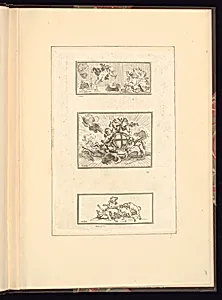
Designs for Decorating Tobacco Boxes
1751-1769
Medium
Classification
Department
Smithsonian Collection
Museum
Smithsonian American Art Museum
Credit
Purchased for the Museum by the Advisory Council
Accession Number
1921-6-414-4
Rights
Public Domain
About this artwork
Research in Progress
Art Historical Context
**Designs for Decorating Tobacco** *Viriclix, active 18th century, 1751–1769* *Print; Smithsonian American Art Museum* Created in the mid-18th century the enigmatic printmaker Viriclix,Designs for Decorating Boxes* captures the ornate world of colonial craftsmanship. This print served as a practical template for artisans adorning tobacco boxes—small, portable containers for snuff or pipe tobacco, a staple of daily life and social ritual in America and Europe. Tobacco, a booming export from the American colonies, fueled not just economies but also a burgeoning culture of luxury goods, where even humble accessories demanded elegant decoration. As a print, the work exemplifies the era's reproductive techniques, likely engraving or etching, which allowed intricate floral motifs, scrolls, or figural elements to be easily copied and applied to wood, metal, or horn. These designs bridged fine art and everyday objects, democratizing sophisticated aesthetics for the growing middle class. Though research on Viriclix and this piece is ongoing, it highlights 18th-century printmaking's role in disseminating style, influencing furniture, silverwork, and personal wares. Today, at the Smithsonian American Art Museum, this artifact invites us to ponder the sensory pleasures of tobacco culture—from the snuff-taker's flourish to the craftsman's precision—offering a window into colonial tastes and ingenuity.