
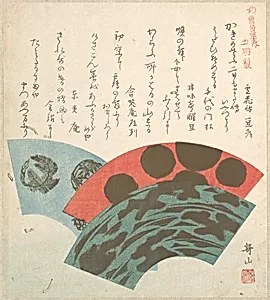
Designs of Fans for Dance
19th century
Medium
Woodblock print (surimono); ink and color on paper
Dimensions
8 1/8 x 7 1/4 in. (20.6 x 18.4 cm)
Classification
Prints
Culture & Period
Japan · Edo period (1615–1868)
Department
Asian Art
Museum
Metropolitan Museum of Art, New York, NY
Credit
H. O. Havemeyer Collection, Bequest of Mrs. H. O. Havemeyer, 1929
Accession Number
JP2097
Rights
Public Domain
Tags
Art Historical Context
Ishikawa Kazan's *Designs of Fans for* is a delicate 19th-century woodblock print from Edo period (16151868), exemplifying the surimono tradition—luxurious, privately commissioned prints often shared among poetry circles or for special occasions. Measuring just 8⅛ x 7¼ inches, this intimate format captures elegant fan designs adorned with motifs suited for dance performances, reflecting the era's fascination with theater, kabuki, and traditional arts. Folding fans (sensu or ogi) were essential accessories in Japanese culture, used not only for cooling but as rhythmic props in dances, symbolizing grace and impermanence. Printed with vibrant inks and colors on paper, the work showcases ukiyo-e techniques: precise carving for fine lines, subtle gradients (bokashi), and possibly metallic accents for a shimmering effect. Kazan, a versatile artist blending literati painting with popular print styles, infused his designs with naturalistic elegance, drawing from nature-inspired patterns ideal for performers. Housed in the Metropolitan Museum of Art's Asian Art department as part of the renowned H. O. Havemeyer Collection, this piece offers a window into Edo Japan's refined aesthetic world, where art bridged elite patronage and everyday beauty.