
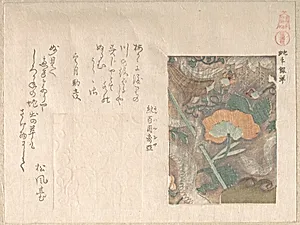
Designs of Imported Leathers
19th century
Medium
Woodblock print (surimono); ink and color on paper
Dimensions
5 7/16 x 7 1/8 in. (13.8 x 18.1 cm)
Classification
Prints
Culture & Period
Japan · Edo period (1615–1868)
Department
Asian Art
Museum
Metropolitan Museum of Art, New York, NY
Credit
H. O. Havemeyer Collection, Bequest of Mrs. H. O. Havemeyer, 1929
Accession Number
JP2145
Rights
Public Domain
Tags
Art Historical Context
Kubo Shunman’s *Designs of Imported Leathers* is a charming 19th-century surimono—a luxurious, privately commissioned woodblock print from Japan’s Edo period (1615–1868). Measuring just 5 7/16 x 7 1/8 inches, this ink and color on paper work captures floral motifs inspired by exotic foreign leathers, reflecting Japan’s subtle fascination with imported goods during a time of relative isolation. Shunman, a master of the ukiyo-e tradition, excelled in these small-scale gems, often blending poetry, nature, and whimsy for elite patrons. Surimono like this one showcase advanced woodblock techniques: vibrant colors layered with precision, subtle embossing for texture, and sometimes mica for shimmer, evoking the tactile allure of leather itself. The floral tags hint at elegant patterns—perhaps chrysanthemums or peonies—symbolizing beauty and transience in Japanese aesthetics. Produced amid Edo’s urban flourishing, it highlights cultural curiosity about the West via limited trade, bridging Japan’s insularity with global influences. Part of the Metropolitan Museum of Art’s H. O. Havemeyer Collection, this print invites you to appreciate how everyday luxury inspired art. A pocket-sized window into Edo elegance! (198 words)
About the Artist
Kubo Shunman · 1757–1820
Japanese, 1757–1820