
Rose, Iris, Primrose and Daisy
1815
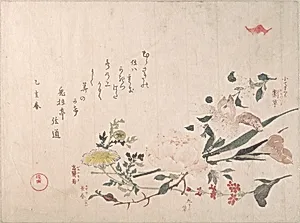
Medium
Woodblock print (surimono); ink and color on paper
Dimensions
8 7/16 x 11 1/4 in. (21.4 x 28.6 cm)
Classification
Prints
Culture & Period
Japan · Edo period (1615–1868)
Department
Asian Art
Museum
Metropolitan Museum of Art, New York, NY
Credit
H. O. Havemeyer Collection, Bequest of Mrs. H. O. Havemeyer, 1929
Accession Number
JP2214
Rights
Public Domain
Tags
Art Historical Context
**Rose, Iris, Primrose Daisy** (1815) by Kubo Shunman is a delicate woodblock print (surimono) from Japan's Edo period (1615–1868), showcasing the artist's mastery in capturing floral beauty. Measuring just 8 7/16 x 11 1/4 inches, this intimate work features vibrant roses, irises, primroses, and daisies rendered in ink and color on paper. Shunman, a talented ukiyo-e printmaker and poet active in the early 19th century, specialized in these luxurious surimono—privately commissioned prints often created for New Year's greetings or poetry gatherings, adorned with subtle embossing and metallic pigments for a tactile, shimmering effect. In the Edo period, woodblock printing flourished as an accessible yet refined art form, blending technical precision with poetic elegance. Shunman's composition highlights seasonal flowers, symbols of transience and natural harmony in Japanese culture, evoking the wabi-sabi aesthetic of impermanence. The careful layering of colors and fine lines demonstrates the collaborative genius of carvers, printers, and publishers, making each surimono a bespoke treasure. Part of the Metropolitan Museum of Art's H. O. Havemeyer Collection, this print invites visitors to appreciate the quiet splendor of everyday motifs elevated to art. It's a window into Edo Japan's refined tastes, where nature's simplicity inspired profound beauty. (198 words)
About the Artist
Kubo Shunman · 1757–1820
Japanese, 1757–1820