
Die Heimkehr des Landwehrmannes
1820
Medium
Öl auf Leinwand
Dimensions
280 x 360 cm
Classification
Gemälde
Department
Belvedere Collection
Museum
Belvedere
Credit
Belvedere, Vienna
Accession Number
2243
Rights
Public Domain
About this artwork
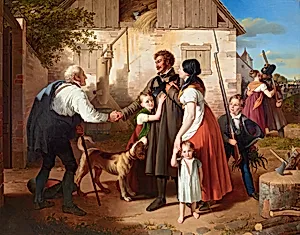
Dieses Gemälde von Johann Peter Krafft bildet das Gegenstück zum Bild "Abschied des Landwehrmannes", das sieben Jahre zuvor entstanden war. Die Heimkehrszene spielt vor dem Haus im Freien und nicht mehr in der dunklen Bauernstube, wie der Abschied. Statt des seitlichen Streiflichtes wird die Szene durch die Sonne von oben hell beleuchtet. Strahlende Farben dominieren. Die Protagonisten sind dieselben, die Krafft auch beim Abschied darstellte. An den älter gewordenen Kindern zeigt sich, dass eini...
Art Historical Context
**Die Heimkehr des Landwehrmannes (The Return of the Landwehr Man), 1820** Johann Peter Krafft, a leading Austrian history painter of the early 19th century, created this monumental oil on canvas (280 x cm) as a joyful counterpart to his 1813 work *Abschied des Landwehannes* (The Farewell of the Landwehr Man Painted amid the patriotic fervor following the Napoleonic Wars, it celebrates the homecoming of a militia soldier from Austria's Landwehr forces, evoking themes of sacrifice, reunion, and national. Displayed in Vienna's Belvedere Collection, the large-scale canvas immerses viewers in a moment of collective relief and familial love. Unlike the dim, shadowy interior of the farewell scene with its sidelight drama, Krafft bathes this outdoor reunion in radiant sunlight from above, flooding the composition with vibrant colors. The same family protagonists return, their children noticeably older after years apart, embracing the decorated hero who proudly wears a bravery medal at his collar. In the background, another reunited couple from the earlier painting shares a tender moment, reinforcing the emotional continuity. This masterful shift in light and palette symbolizes hope emerging from hardship. A smaller preliminary version resides in Vienna's Schottenstift, highlighting Krafft's meticulous process. Through neoclassical precision and romantic sentiment, the painting captures Biedermeier-era values of hearth, heroism, and resilience, inviting us to reflect on the human cost and rewards of war.