
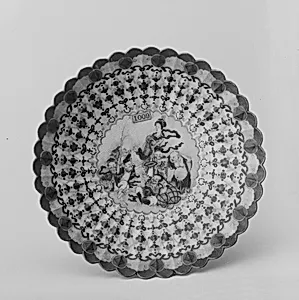
Dish
Unknown Artist
19th century
Medium
White porcelain decorated with polychrome enamels (Hizen ware, Kutani type)
Dimensions
H. 1 7/8 in. (4.8 cm); Diam. 8 3/8 in. (21.3 cm)
Classification
Ceramics
Culture & Period
Japan · Edo (1615–1868) or Meiji period (1868–1912)
Department
Asian Art
Museum
Metropolitan Museum of Art, New York, NY
Credit
Purchase by subscription, 1879
Accession Number
79.2.1276
Rights
Public Domain
Tags
Art Historical Context
This elegant 19th-century Japanese dish, crafted in white porcelain and adorned with vibrant polychrome enamels, the artistry of Hizen ware in the Kutani style. just under 2 inches high and8⅜ inches in diameter, its shallow form was ideal for serving sweets or small delicacies in a refined household setting. The decorations likely feature lively scenes of men and women, rendered in bold overglaze enamels—reds, greens, blues, and golds—that bring a sense of movement and narrative to the surface. Produced in the Hizen region (notably Arita kilns), this piece dates to the late Edo period (1615–1868) or early Meiji era (1868–1912), a time when Japanese ceramics blended traditional motifs with influences from global trade. Kutani-type wares were prized for their exuberant, multicolored palettes, achieved through intricate enamel firing techniques that fused pigments onto the glazed porcelain at lower temperatures. These dishes often reflected everyday life, folklore, or courtly gatherings, showcasing Japan's mastery of porcelain export art during a period of cultural transition. Acquired by subscription in 1879 for the Metropolitan Museum of Art's Asian Art collection, this anonymous masterpiece highlights the West's early fascination with Japanese aesthetics amid the Meiji opening to the world. A delightful glimpse into Edo-Meiji refinement, it invites us to appreciate the porcelain's subtle glow and the enduring joy of its colorful storytelling.