
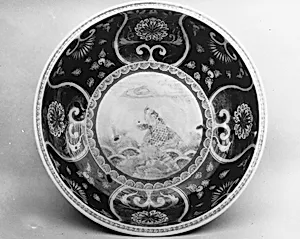
Dish
Unknown Artist
1760
Medium
Porcelain decorated in blue under the glaze and colored enamels; (Arita ware, Imari style)
Dimensions
H. 2 7/8 in. (7.3 cm); Diam. 9 1/2 in. (24.1 cm)
Classification
Ceramics
Culture & Period
Japan · Edo period (1615–1868)
Department
Asian Art
Museum
Metropolitan Museum of Art, New York, NY
Credit
Gift of Mrs. V. Everit Macy, 1923
Accession Number
23.225.145
Rights
Public Domain
Tags
Art Historical Context
This elegant porcelain dish, crafted around 1760 during Japan's Edo period (1615–1868), exemplifies the Arita ware produced in Saga Prefecture. Measuring just 2⅞ inches high and 9½ inches in diameter, it features vibrant floral motifs rendered in the distinctive Imari style—a hallmark of Japanese export porcelain. The decoration combines cobalt blue painted under the glaze for durability and depth, topped with colorful overglaze enamels in reds, greens, and golds, creating a luminous, jewel-like effect that captivated European collectors. Arita kilns, established in the early 17th century, revolutionized Japanese ceramics by mastering hard-paste porcelain similar to Chinese prototypes but infused with local ingenuity. During the Edo era's prosperity and isolationist policies, Imari wares like this dish were prized trade goods, bridging East and West through the Dutch East India Company. The floral designs symbolize nature's beauty and seasonal harmony in Japanese aesthetics, evoking the refined tastes of samurai and merchant classes. Today, this gift to the Metropolitan Museum of Art from Mrs. V. Everit Macy in 1923 invites visitors to appreciate the technical precision and cultural exchange embodied in everyday elegance. A testament to unseen artisans' skill, it whispers of porcelain's global journey.