
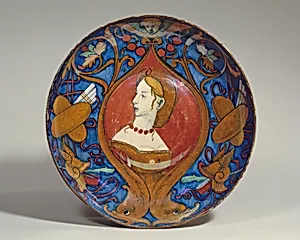
Dish (coppa umbonata)
Medium
Maiolica (tin-glazed earthenware)
Dimensions
Diameter: 8 1/4 in. (20.9 cm)
Classification
Ceramics-Pottery
Department
Robert Lehman Collection
Museum
Metropolitan Museum of Art, New York, NY
Credit
Robert Lehman Collection, 1975
Accession Number
1975.1.1104
Rights
Public Domain
Tags
Art Historical Context
This exquisite maiolica dish, created in 1522 by Maestro Giorgio Andreoli, exemplifies the refined artistry of Italian Renaissance ceramics. Andreoli, a master potter from Gubbio, was celebrated for his innovative use of metallic luster glazes that produced shimmering gold and ruby effects on tin-glazed earthenware. Known as a coppa umbonata the form features a raised central boss, making it both functional and decorative—ideal for display in the homes of wealthy patrons. The dish’s surface showcases delicate profile portraits of women, a popular motif in Renaissance art symbolizing beauty, virtue, and classical ideals. These finely painted figures reflect the period’s fascination with antiquity and humanist themes, rendered in vibrant colors typical of maiolica production in central Italy. Such works were prized not only for their utility but as sophisticated conversation that elevated everyday dining. Today housed in the Metropolitan Museum of Art’s Robert Collection, this small yet luminous piece (just over eight inches in diameter) offers a window into the technical mastery and cultural elegance of early 16th-century Europe. Andreoli’s signature luster technique remains one of the most admired achievements in ceramic history.
About the Artist
Maestro Giorgio Andreoli · 1500–1550
**Maestro Giorgio Andreoli: The Luster Maestro of Gubbio** Giorgio di Pietro Andreoli, known as Maestro Giorgio or Mastro Giorgio da Gubbio, was born between 1465 and 1470 in Intra on Lake Maggiore, the son of potter Pietro Andreoli. After spending his youth in Pavia—where he was noted in documents as "son of Pietro da Pavia"—his family fled following the 1476 assassination of Duke Galeazzo Sforz...