Ctrl K
1500–1550
**Maestro Giorgio Andreoli: The Luster Maestro of Gubbio**
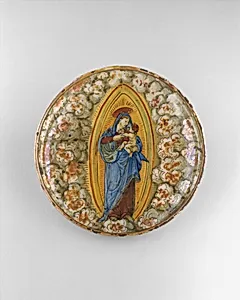
Giorgio di Pietro Andreoli, known as Maestro Giorgio or Mastro Giorgio da Gubbio, was born between 1465 and 1470 in Intra on Lake Maggiore, the son of potter Pietro Andreoli. After spending his youth in Pavia—where he was noted in documents as "son of Pietro da Pavia"—his family fled following the 1476 assassination of Duke Galeazzo Sforza, finding refuge under Federico da Montefeltro in Gubbio within the Duchy of Urbino. By the late 15th century, Giorgio had settled there permanently, gaining citizenship in 1498 along with tax exemptions that Pope Leo X later extended indefinitely. He learned pottery in his birthplace and honed his craft through journeyman travels before opening a workshop in Gubbio's Quartier di S. Andrea around 1495 with his brothers Giovanni, Salimbene, and Francesco di Giovanni da Borgo S. Sepolcro. His early output included glazed terracotta altars in the style of Giovanni della Robbia, such as those for San Domenico in Gubbio (1511–1513) and a Virgin of the Immaculate Conception now in Frankfurt's Liebieghaus.
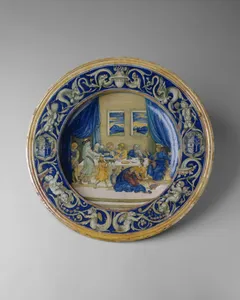
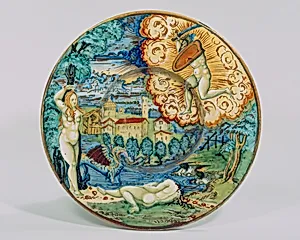
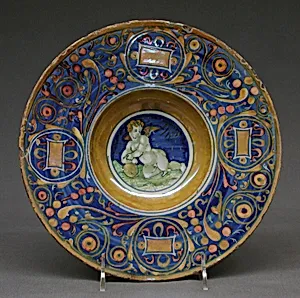
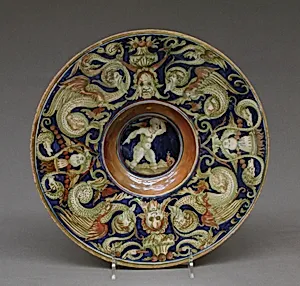
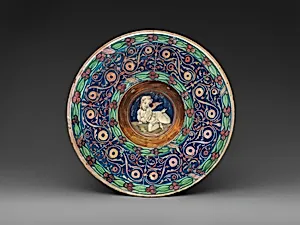
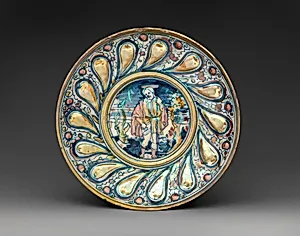
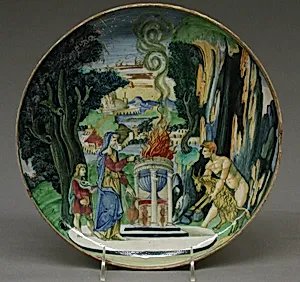
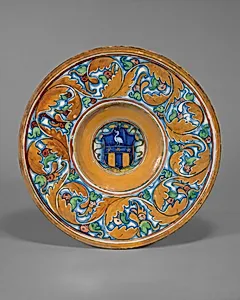
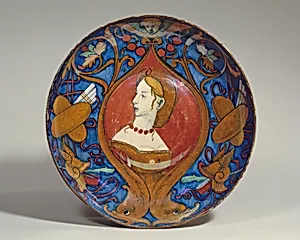
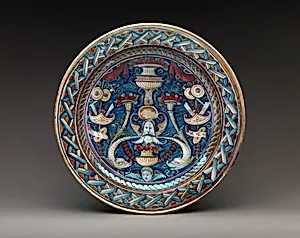
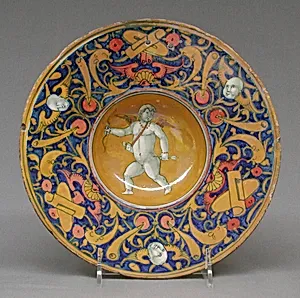
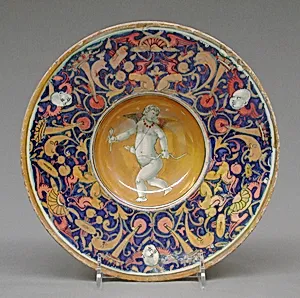
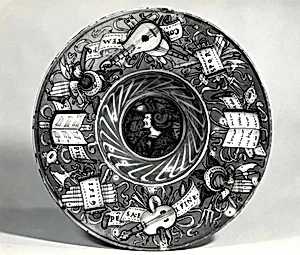
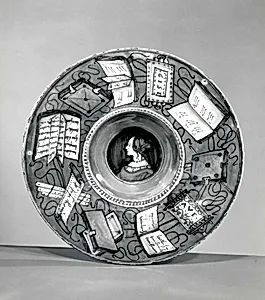
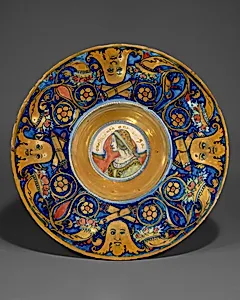
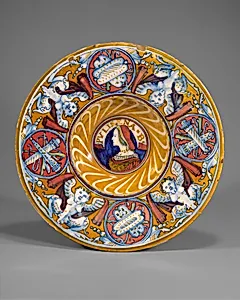
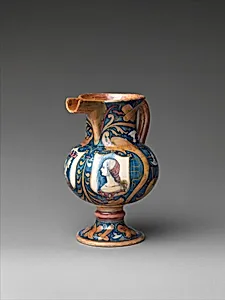
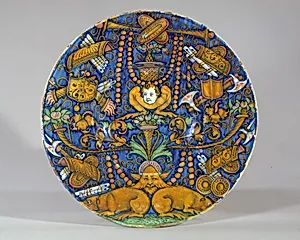
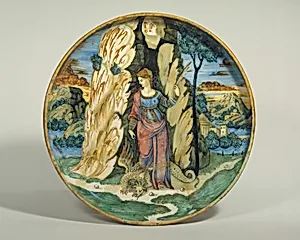
Andreoli revolutionized Italian Renaissance ceramics by inventing a signature lusterware technique around 1518, applying metallic films in ruby red and gold to pre-fired maiolica for iridescent effects—a perfection of ancient Persian and Hispano-Moorish methods. Working in the Gubbio tradition of tin-glazed earthenware (maiolica), his workshop produced istoriato pieces with mythological, historical, and allegorical scenes, coats of arms, grotesques, and busts, often influenced by Deruta maiolica. Potters from Faenza, Urbino, and Pesaro sent him high-quality forms for luster firing and decoration, blending his innovation with regional styles. Assisted by brothers and later sons Vincenzo (Cencio) and Ubaldo, the shop shifted from tableware to elaborate pictorial works, signing many as "Maestro Giorgio da Ugubi" into the 1540s.
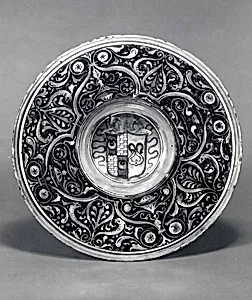
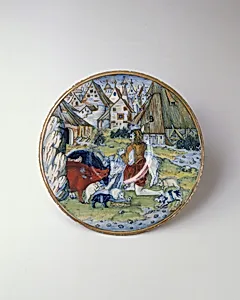
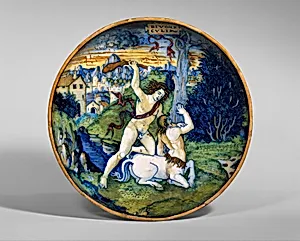
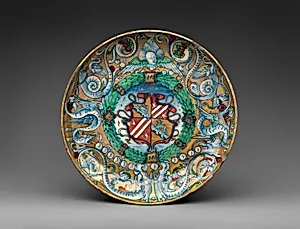
Among his masterpieces are the 1501 glazed terracotta statuette of Saint Sebastian (Victoria and Albert Museum), a dish depicting Cyparissus's metamorphosis (ca. 1525–1530), the 1520 shallow bowl with Hercules overcoming Antaeus (National Gallery of Art), and the 1528 Plate: The Prodigal Son (Cleveland Museum of Art). Other treasures include ewers, plates with arms like those of Cardinal Ciocchi del Monte (Walters Art Museum), and narrative scenes such as Women Bathing (Wallace Collection, 1525).
Andreoli's legacy endures through his sons Vincenzo and Ubaldo, who continued the workshop after his death in Gubbio in 1553 (or 1555). His ruby luster captivated collectors, earning praise in Cipriano Piccolpasso's 1548 treatise and inspiring 19th-century revivals in Pesaro and Deruta. With works in museums from the Louvre to the Met, Maestro Giorgio elevated maiolica from utility to high art, embodying Renaissance ingenuity in clay.