
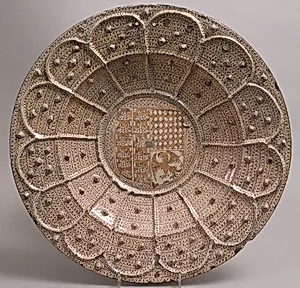
Dish with Heraldic Shield
Unknown Artist
1470–1500
Medium
Tin-glazed earthenware
Dimensions
Overall: 17 1/8 x 2 3/4 in. (43.5 x 7 cm)
Classification
Ceramics
Culture
Spanish
Department
Medieval Art
Museum
Metropolitan Museum of Art, New York, NY
Credit
Bequest of Benjamin Altman, 1913
Accession Number
14.40.728
Rights
Public Domain
Tags
Art Historical Context
This elegant *Dish with Heraldic Shield*, crafted in Spain between 1470 and 1500, exemplifies the artistry of late medieval ceramics. Made of tin-glazed earthenware—a where a tin oxide glaze creates a smooth, opaque white surface ideal for vibrant painted decoration—this shallow dish measures 17⅛ x 2¾ inches. The central heraldic shield, a coat of arms, likely commemorates a noble family or institution, reflecting the era's emphasis on lineage and prestige during Spain's transition from the Middle to the Renaissance. Tin-glazed earthenware, popular in Iberian workshops, drew from Islamic ceramic traditions while adapting European motifs. The durable yet decorative medium made such pieces suitable for both dining and display in affluent households, blending functionality with symbolism. Heraldry on ceramics like this one served as a visual declaration of identity, often used in feasts or as gifts to affirm alliances. Now housed in the Metropolitan Museum of Art's Medieval Art department through the 1913 bequest of Benjamin Altman, this anonymous masterpiece offers a glimpse into Spanish cultural life, where everyday objects carried profound social weight. Visitors, imagine it gracing a Renaissance table, its bold emblem gleaming under candlelight!