
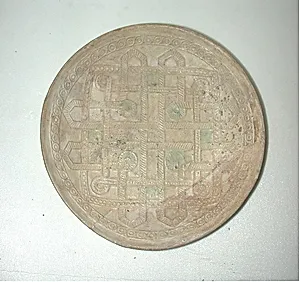
Dish with Interlace Designs
Unknown Artist
9th century
Medium
Earthenware; molded and glazed
Dimensions
Diam. 6 7/8 in. (17.5 cm)
Classification
Ceramics
Department
Islamic Art
Museum
Metropolitan Museum of Art, New York, NY
Credit
Rogers Fund, 1953
Accession Number
53.110
Rights
Public Domain
Art Historical Context
This exquisite 9th-century earthenware, measuring just 6 7/8 inches in diameter, exemplifies the artistry of early Islamic ceramics from the Islamic Art collection at the Metropolitan Museum of Art Crafted by an unknown artist using molding techniques, it features intricate interlace designs—overlapping geometric patterns that create a mesmerizing sense of rhythm and infinity. The addition of glazing not only provided a glossy, durable surface but also enhanced the play of light on the raised motifs, making this functional object a true work of beauty. In the Abbasid era, such dishes were everyday items for serving food, yet their elaborate decoration reflects the cultural flourishing of Islamic art. Interlace, or arabesque, patterns were a hallmark of the period, symbolizing the boundless nature of the universe and adhering to aniconic traditions that favored abstraction over human or animal forms. The molding process allowed artisans to achieve fine detail without painting, showcasing advanced technical skill in a pre-wheel-thrown pottery context. Today, acquired through the Rogers Fund in 1953, this dish invites us to appreciate how Islamic potters transformed humble earthenware into vessels of profound aesthetic and spiritual significance, bridging utility and artistry across centuries.