
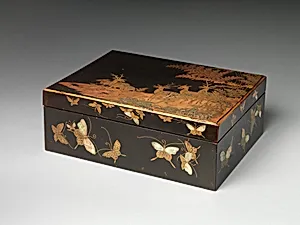
鹿蝶々蒔絵料紙箱|Document Box (Ryōshibako) with Deer and Butterflies
Unknown Artist
17th century
Medium
Lacquered wood with gold takamaki‑e, hiramaki‑e, togidashimaki‑e, mother‑of‑pearl inlay, and silver foil application
Dimensions
L. 17 3/4 in. (45.1 cm); W. 12 1/4 in. (31.1 cm); H. 6 3/4 in. (17.1 cm)
Classification
Lacquer
Culture & Period
Japan · Edo period (1615–1868)
Department
Asian Art
Museum
Metropolitan Museum of Art, New York, NY
Credit
Gift of Florence and Herbert Irving, 2015
Accession Number
2015.500.2.52a, b
Rights
Public Domain
Tags
Art Historical Context
This exquisite *Document Box (Ryōshibako) with Deer and Butterflies crafted in 17th-century Japan during the Edo period (1615–1868), exemplifies the pinnacle of lacquerware artistry. Ryōshibako were practical yet luxurious containers used by samurai, scholars, and elites to store documents, seals, and writing tools. Measuring a generous 17¾ by 12¼ by 6¾ inches, this box from the Metropolitan Museum of Art's Asian Art collection was a gift from Florence and Herbert Irving in 2015, showcasing the era's blend of functionality and opulent decoration. The unknown artist employed masterful *maki-e* techniques—*takamaki-e* for raised gold designs that create a tactile, shimmering relief; *hiramaki-e* for flat, smooth gold layers; and *togidashimaki-e* for polished effects revealing underlying patterns. Delicate mother-of-pearl inlays and silver foil enhance the motifs of graceful deer amid butterflies and plants, evoking nature's harmony. Deer symbolized longevity and good fortune in Japanese culture, while butterflies represented joy and transformation, infusing the piece with auspicious symbolism. Edo lacquerware like this reflects Japan's thriving peace-time economy and *kanō* painting influences, where everyday objects became canvases for virtuosic craft. Visitors will appreciate its radiant glow under light, a testament to centuries-old traditions still revered today.