
元 佚名 墨龍圖 軸|Dragon
14th century
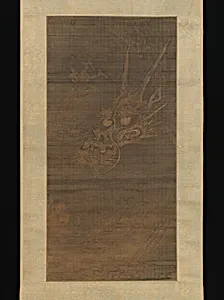
Medium
Hanging scroll; ink on silk
Dimensions
31 11/16 x 15 7/8 in. (80.5 x 40.3 cm)
Classification
Paintings
Culture & Period
China · Yuan (1271–1368) or Ming (1368–1644) dynasty
Department
Asian Art
Museum
Metropolitan Museum of Art, New York, NY
Credit
Gift of Mr. and Mrs. Kwan S. Wong, 1986
Accession Number
1986.345.2
Rights
Public Domain
Tags
Art Historical Context
This striking ink painting of a dragon, created in 14th-century China during the Yuan or early Ming dynasty, embodies the enduring cultural reverence for dragons as symbols of imperial power, wisdom, and auspicious fortune. Produced as a hanging scroll on silk the work follows a long tradition of Chinese dragon imagery that dates back millennia, where these mythical creatures were believed to control weather and bring prosperity. Its compact scale—roughly 80 by 40 centimeters—suggests it was intended for intimate viewing in a scholar’s studio or private collection rather than a grand palace hall. The anonymous artist employs the classic technique of monochromatic ink on silk, using fluid, expressive brushwork to convey the dragon’s sinuous movement and ethereal energy. Without color, the painting relies on varying ink tones and dynamic line work to suggest scales, claws, and swirling clouds, demonstrating the sophisticated restraint central to East Asian ink painting. Such scrolls were often displayed seasonally or for special occasions, allowing the dragon’s form to “come alive” as the silk gently moved. Now part of the Metropolitan Museum of Art’s Asian Art collection, this piece was generously donated in 1986 by Mr. and Mrs. Kwan S. Wong. It offers visitors a vivid glimpse into the spiritual and artistic values of its time, when dragons served as potent emblems bridging the natural and divine worlds.
About the Artist
Muqi|Unidentified · 1250–1280
Muqi Fachang (c. 1210?–1269?), a Chan Buddhist monk from Sichuan, emerged as one of the Southern Song dynasty's most evocative painters, blending spiritual insight with bold ink techniques. Early details of his life remain sparse, but he began as a monk in a Sichuan monastery before becoming a disciple of the revered Chan master Wuzhun Shifan (1177–1249) at Mount Qingcheng, where their master-disc...