
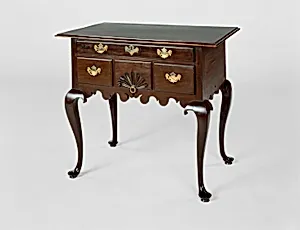
Dressing Table
1750–70
Medium
Mahogany and white pine
Dimensions
78.2 × 88.9 × 57.2 cm (30 3/4 × 35 × 22 1/2 in.)
Classification
table
Department
Arts of the Americas
Museum
Art Institute of Chicago
Accession Number
109437
Rights
Public Domain
About this artwork
Dressing tables were most often made together with high chests of drawers. Used in the bedchamber, the dressing table held objects for grooming, such as combs, brushes, powders, ribbons, and pieces of lace. A looking glass was often hung above the table, or a dressing glass was set upon the table. A silk, velvet, or cotton textile, known as a toilette, would have covered the top and protected it from wear and damage.
Art Historical Context
Step into the refined world of mid-18th-century American domestic life with this elegant dressing table, crafted between 1750 and 1770. Housed in the Art Institute of Chicago's Arts the Americas department, this stands as a testament to the burgeoning craftsmanship of colonial cabinetmakers. Measuring 78.2 × 88.9 × 57.2 cm, it served as a personal vanity for grooming and dressing, a luxury item in prosperous households during the pre-Revolutionary era when European influences blended with local ingenuity. Constructed from rich mahogany—a premium imported wood from the West Indies, prized for its durability and deep reddish hue—and sturdy white pine for secondary elements, the table highlights the era's sophisticated woodworking techniques. Mahogany's use underscores the owner's affluence, as it was expensive to transport and work, often reserved for high-end furniture in ports like Newport or Philadelphia. The unknown artist's skill in joinery and veneering would have created smooth surfaces ideal for mirrors and toiletries, reflecting the growing sophistication of American design amid British colonial trade. Today, this table offers a tangible glimpse into everyday opulence, inviting us to ponder the lives of those who once admired their reflections upon it. A fine example of 18th-century functional art, it celebrates the artistry hidden in household objects.