
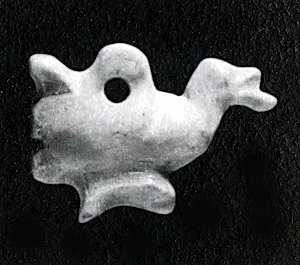
Duckling amulet
Unknown Artist
ca. 2110–2030 B.C.
Medium
Ivory
Classification
Amulet, Duckling
Period
Old Kingdom–First Intermediate Period
Department
Egyptian Art
Museum
Metropolitan Museum of Art, New York, NY
Credit
Rogers Fund, 1965
Accession Number
65.46.12
Rights
Public Domain
Tags
Art Historical Context
Nestled in the Metropolitan Museum of Art's Egyptian Art collection, this charmingDuckling Amulet*ca. 2110–0 B.C.) is a delicate carving from the late Old Kingdom through the First Period (Dynasties 8–11). Crafted from ivory—a luxurious material sourced from elephant hippopotamus tusks tiny talisman captures the, endearing form of aling in exquisite detail, showcasing the ancient Egyptians' mastery miniature sculpture. During this era of political fragmentation following the Old Kingdom's grandeur, such amulets served vital protective roles. Worn as jewelry or placed in tombs, they embodied apotropaic magic, warding off evil and ensuring fertility or safe passage to the afterlife. Ducks, a recurring motif in Egyptian art, often symbolized renewal and the nurturing Nile floods, reflecting the culture's deep ties to nature and the agricultural cycle. Acquired through the Rogers Fund in 1965, this artifact offers a glimpse into everyday spirituality amid turbulent times. Its smooth, tactile ivory invites touch, evoking the reverence ancient wearers felt for these pocket-sized guardians. A testament to enduring craftsmanship, it reminds us how even the smallest objects carried profound cultural weight.