
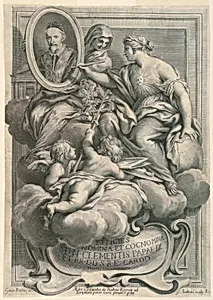
Effigies Nomina et Cocnomina Clementis Papae IX
1640-1703
Classification
Department
Smithsonian Collection
Museum
Smithsonian American Art Museum
Credit
Gift of Eleanor and Sarah Hewitt
Accession Number
1931-94-123
Rights
Public Domain
About this artwork
Research in Progress
Art Historical Context
Gérard Audran (1640–1703), a masterful French engraver from a renowned family of printmakers, created *Effigies Nomina Cocnomina Clementisae IX*, a striking print honoring Pope Clement IX (reigned 1667–1669). This work captures the likeness, names, and titles of the pontiff, reflecting the era's fascination with papal portraiture as a symbol of spiritual and political authority. Audran's intricate engravings often reproduced paintings by leading Baroque artists, blending technical precision with dramatic flair to elevate prints from mere reproductions to standalone artworks. As a 17th-century print, this piece exemplifies the golden age of European engraving, where the medium democratized access to elite imagery. Audran's technique—fine lines, rich tonal contrasts, and meticulous detail—showcased the burin’s potential for lifelike portraiture, making papal effigies portable emblems of devotion for collectors and clergy alike. Though the exact medium remains under study, its classification as a print underscores its role in disseminating Catholic iconography across Europe. Now in the Smithsonian American Art Museum's collection, gifted by Eleanor and Sarah Hewitt, this work invites us to ponder the intersections of art, faith, and diplomacy in the Baroque world. Research continues to unveil more about its creation, promising fresh insights into Audran's legacy.